CoQ10 Softgel Manufacturing Guide: Formulation, Bulk Production, Wholesale and Manufacturer Selection
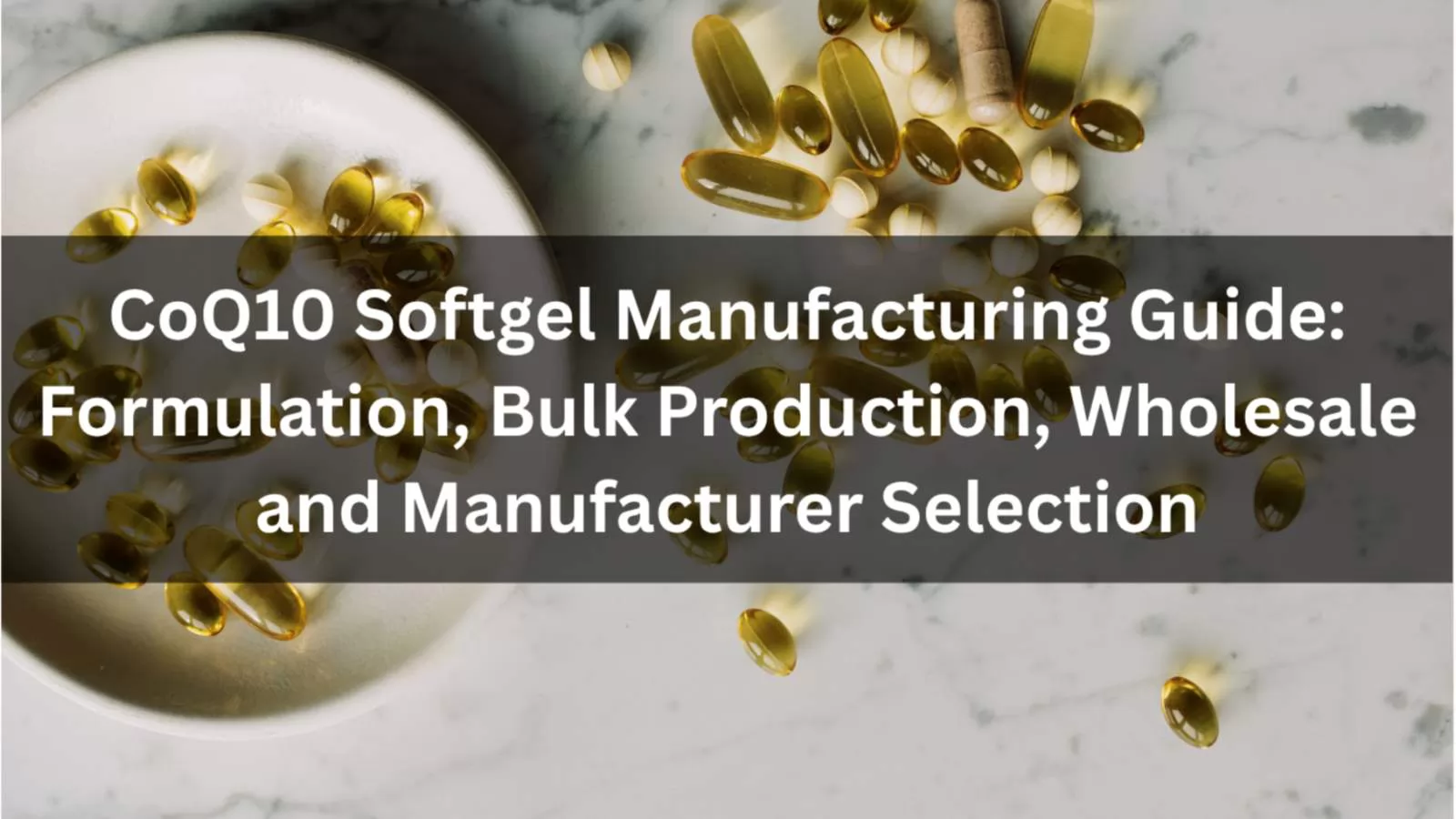
Coenzyme Q10, commonly known as CoQ10, is one of the most established ingredients in the global nutritional supplement market. It is widely used in cardiovascular health, healthy aging, energy metabolism, antioxidant support, and general wellness product categories.
For supplement brands, distributors, private label companies, and bulk buyers, however, developing a reliable CoQ10 softgel requires more than selecting a dosage and placing the ingredient inside a capsule. Commercial performance depends on the CoQ10 raw material form, purity, particle characteristics, oil carrier system, fill uniformity, softgel shell compatibility, oxidation control, manufacturing process, packaging, and finished-product testing.
For companies sourcing CoQ10 supplements from China, understanding these factors can help them compare manufacturers, develop an OEM formula, purchase bulk softgels, and build a more stable long-term supply chain. This guide explains the main considerations behind CoQ10 softgel formulation, bulk production, wholesale sourcing, OEM customization, quality control, and manufacturer selection.
Contents
- What Is CoQ10?
- Ubiquinone vs. Ubiquinol: What Is the Difference?
- Why Are Softgels Commonly Used for CoQ10?
- CoQ10 Softgel Formulation
- CoQ10 Softgel Shell and Capsule Options
- CoQ10 Softgel Manufacturing Process
- Stability and Oxidation Control
- CoQ10 Bulk Production and Commercial Scale-Up
- OEM and Custom CoQ10 Softgels
- Bulk CoQ10 Softgel Wholesale vs. Private Label
- What Information Should You Send to a CoQ10 Manufacturer?
- How to Choose a CoQ10 Softgel Manufacturer in China
- Wright Life as a CoQ10 Softgel Manufacturer in China
- Buyer Questions, OEM Workflow & Sourcing Checklist
- Frequently Asked Questions
- Conclusion
What Is CoQ10?
Coenzyme Q10 is a naturally occurring, fat-soluble compound found in the human body. It participates in mitochondrial energy production and also functions as an antioxidant. Because natural CoQ10 levels may vary with age, diet, and physiological conditions, CoQ10 has become a widely used ingredient in dietary supplements.
From a manufacturing perspective, CoQ10 is different from ordinary water-soluble vitamin ingredients. It is lipophilic and poorly soluble in water, which means the dosage form and carrier system play an important role in commercial formulation.
Important CoQ10 raw material specifications typically include:
- CoQ10 form: Ubiquinone or ubiquinol.
- Assay and purity: Defined active ingredient concentration based on the raw material specification.
- Raw material source: Such as fermentation-derived CoQ10.
- Particle characteristics: Relevant to dispersion and suspension performance.
- Appearance: Typically an orange to yellow-orange crystalline material for ubiquinone.
- Supporting documentation: COA, specification sheet, allergen information, batch records, and traceability documentation.
Commercial product development should therefore begin with a clearly defined ingredient specification rather than simply requesting a generic “CoQ10 softgel.”
Ubiquinone vs. Ubiquinol: What Is the Difference?
CoQ10 supplements are generally formulated using one of two major forms: ubiquinone and ubiquinol. Although they are related forms of Coenzyme Q10, they have different formulation requirements and commercial positioning.
| Parameter | Ubiquinone | Ubiquinol |
|---|---|---|
| Chemical Form | Oxidized form of CoQ10 | Reduced form of CoQ10 |
| Commercial Positioning | Widely used in conventional CoQ10 supplements | Frequently positioned as a premium CoQ10 option |
| Formulation | Suitable for oil-based softgel formulations and suspension systems | Requires careful formulation and protection against oxidation |
| Cost | Generally more economical for large-volume production | Typically higher raw material cost |
| Common Dosage Positioning | Often used for standard 30 mg, 60 mg, 100 mg, 200 mg and higher formulations | Frequently used in premium 50 mg, 100 mg and related formulations |
The appropriate choice depends on the brand's target consumer, intended product positioning, target cost, dosage strategy, and regulatory requirements.
Why Are Softgels Commonly Used for CoQ10?
CoQ10 is a fat-soluble ingredient, making oil-based delivery systems particularly relevant for supplement formulation. Softgels provide a practical way to encapsulate CoQ10 together with carrier oils and other compatible lipid-soluble ingredients.
A conventional CoQ10 softgel consists of two key parts:
- Fill formulation: CoQ10 dispersed, suspended, or formulated within an oil-based carrier matrix.
- Softgel shell: A hermetically sealed gelatin or alternative shell surrounding the fill material.
For commercial brands, the softgel format offers several advantages:
- Accurate unit dosing: Controlled fill weight helps maintain consistency from capsule to capsule.
- Oil-based formulation: Appropriate for lipophilic ingredients such as CoQ10.
- Consumer convenience: Softgels are easy to package, count, and incorporate into daily supplement routines.
- Ingredient protection: The sealed dosage form helps reduce direct exposure of the formulation to the surrounding environment.
- Premium appearance: Clear, amber, opaque, and colored shells allow different retail positioning.
- Flexible formulation: CoQ10 can be combined with selected oils, vitamin E, and other fat-soluble nutrients when technically compatible.
CoQ10 Softgel Formulation
Formulation is one of the most important stages of a CoQ10 softgel project. Manufacturers must balance the target label claim with raw material concentration, oil carrier selection, fill viscosity, suspension stability, capsule dimensions, processing characteristics, and shelf-life requirements.
1. CoQ10 Raw Material Specification
Before commercial production, the buyer and manufacturer should confirm the raw material specification. Important items include:
- Ubiquinone or ubiquinol form
- CoQ10 assay and purity specification
- Ingredient origin and manufacturing method
- Particle size or physical characteristics where applicable
- Residual solvent limits
- Heavy metal specifications
- Microbiological limits
- Raw material COA and batch traceability
2. CoQ10 Dosage per Softgel
Commercial CoQ10 supplements are available in many strengths. Common market specifications may include:
- 30 mg CoQ10 softgels
- 50 mg CoQ10 softgels
- 60 mg CoQ10 softgels
- 100 mg CoQ10 softgels
- 200 mg CoQ10 softgels
- Higher-potency custom formulations
Dosage affects not only ingredient cost but also fill volume, oil-to-active ratio, capsule size, suspension behavior, and production economics.
3. Carrier Oil Selection
Because CoQ10 has limited water solubility, a suitable lipid carrier is normally incorporated into the softgel fill system. Depending on the formula and target positioning, manufacturers may evaluate:
- MCT oil
- Olive oil
- Sunflower oil
- Safflower oil
- Soybean oil
- Other compatible food-grade lipid systems
Carrier selection should consider ingredient compatibility, oxidative stability, allergen requirements, viscosity, sourcing cost, target market, and label positioning.
4. Solubilized vs. Suspension Formulations
Depending on dosage strength and formulation technology, CoQ10 may be developed using a dissolved or partially dissolved oil system, or as a controlled suspension.
High-strength formulas can create greater formulation challenges because increasing the amount of CoQ10 may increase viscosity and the amount of suspended material. Manufacturers must therefore control particle distribution and mixing conditions to reduce settling and maintain consistent fill weights.
5. Supporting Ingredients
A custom CoQ10 formula may also include compatible supporting ingredients depending on product positioning. Examples include:
- Vitamin E
- MCT oil
- Omega-3 oils
- Selected plant oils
- Other fat-soluble nutrients
Multi-ingredient products require additional compatibility testing because each added component can affect viscosity, oxidation resistance, capsule size, and overall stability.
CoQ10 Softgel Shell and Capsule Options
Once the fill formulation has been established, the manufacturer can configure the softgel shell according to technical requirements and brand positioning.
| Customization Parameter | Available Options | Commercial Consideration |
|---|---|---|
| Shell Material | Conventional gelatin or selected plant-based softgel systems | Depends on formulation compatibility, brand positioning, and target consumer |
| Capsule Shape | Oval, oblong, round and other available tooling | Selected according to fill volume and swallowability |
| Shell Appearance | Clear, amber, opaque, or customized color | Supports light protection and visual branding |
| Capsule Size | Multiple sizes based on fill weight | Higher CoQ10 dosages may require larger capsule volumes |
| Printing / Identification | Selected printing or identification options depending on production capability | Useful for private label differentiation |
CoQ10 Softgel Manufacturing Process
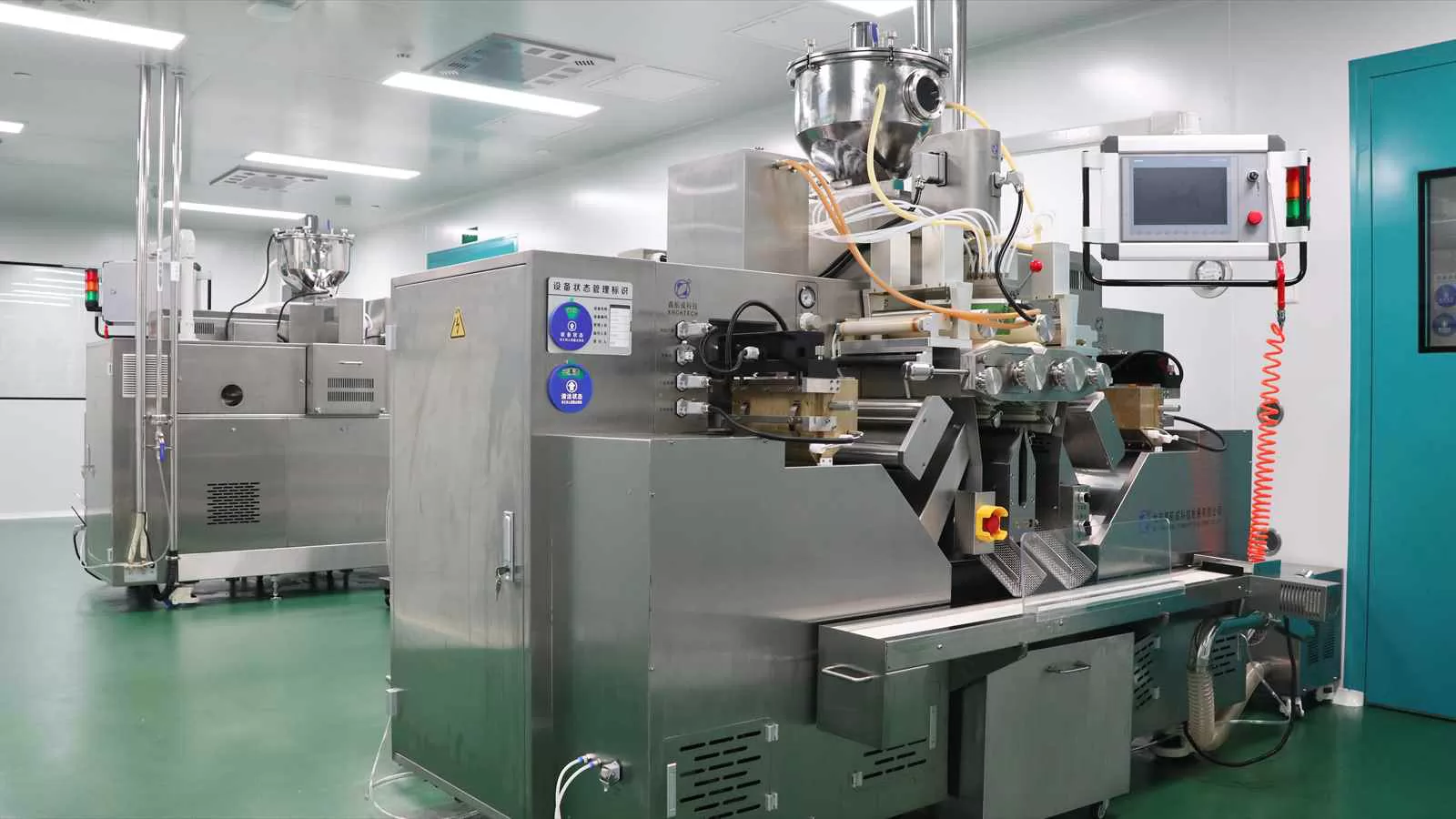
Commercial CoQ10 softgel manufacturing normally involves a sequence of controlled production and quality assurance steps.
- Raw Material Receiving and Inspection: CoQ10, carrier oils, gelatin ingredients, excipients, and packaging materials are received according to approved specifications and batch documentation.
- Raw Material Testing: Identity, assay, purity, microbiological indicators, heavy metals, and other applicable quality parameters are checked according to the manufacturer's quality system.
- Fill Formulation Preparation: CoQ10 is combined with the selected carrier system under controlled temperature and mixing conditions.
- Homogenization and Suspension Control: For formulas containing suspended CoQ10, mixing parameters are controlled to promote consistent distribution throughout the batch.
- Gelatin Mass Preparation: Shell ingredients are prepared to achieve the required elasticity, thickness, sealing behavior, and moisture characteristics.
- Rotary Die Encapsulation: The CoQ10 formulation is accurately injected between gelatin ribbons and sealed into individual softgels.
- Tumble Drying: Fresh capsules undergo initial drying to remove surface moisture and stabilize capsule shape.
- Controlled Drying and Curing: Capsules continue drying in a temperature- and humidity-controlled environment until appropriate shell characteristics are achieved.
- Inspection and Sorting: Capsules are checked for leakage, deformation, fill variation, damaged seams, and appearance defects.
- Finished Product Testing: Representative samples are tested according to the finished-product specification.
- Bulk Packing or Retail Packaging: Approved softgels are either packed in bulk containers or transferred to bottling, labeling, sealing, and carton packaging lines.
Stability and Oxidation Control in CoQ10 Softgel Production
CoQ10 formulation stability depends on the active ingredient form, carrier oil, supporting ingredients, oxygen exposure, light exposure, temperature, shell compatibility, and packaging system.
Manufacturers may use several approaches to improve product stability:
- Controlled raw material storage: Protecting CoQ10 and oils from excessive heat, moisture, and light.
- Controlled processing temperature: Avoiding unnecessary thermal exposure during formulation and encapsulation.
- Oxidatively stable carrier oils: Selecting oils appropriate for the intended shelf life.
- Antioxidant support: Using compatible antioxidants such as tocopherols where appropriate.
- Reduced oxygen exposure: Controlling air incorporation during mixing and filling.
- Protective shell and packaging: Amber or opaque packaging can be considered for products requiring additional light protection.
- Stability testing: Evaluating product characteristics during development and commercial shelf-life programs.
Ubiquinol formulations generally require particularly careful oxidation management because the reduced form is more sensitive to conversion during manufacturing and storage.
CoQ10 Bulk Production and Commercial Scale-Up
Moving from laboratory formulation to commercial-scale manufacturing requires more than simply increasing batch size. Mixing efficiency, raw material dispersion, fill temperature, encapsulation speed, drying conditions, and finished-product uniformity can change when production volume increases.
During scale-up, manufacturers should confirm:
- Raw material availability for the planned batch size
- CoQ10 dispersion or dissolution consistency
- Fill viscosity during the full production cycle
- Softgel fill-weight accuracy
- Capsule seam integrity
- Drying time and shell moisture balance
- Finished-product assay uniformity
- Packaging compatibility
- Commercial batch yield
- Production lead time and reorder capacity
Brands expecting continued growth should also evaluate whether the supplier can support repeat orders and larger annual volumes without changing raw materials or manufacturing specifications unexpectedly.
OEM and Custom CoQ10 Softgels
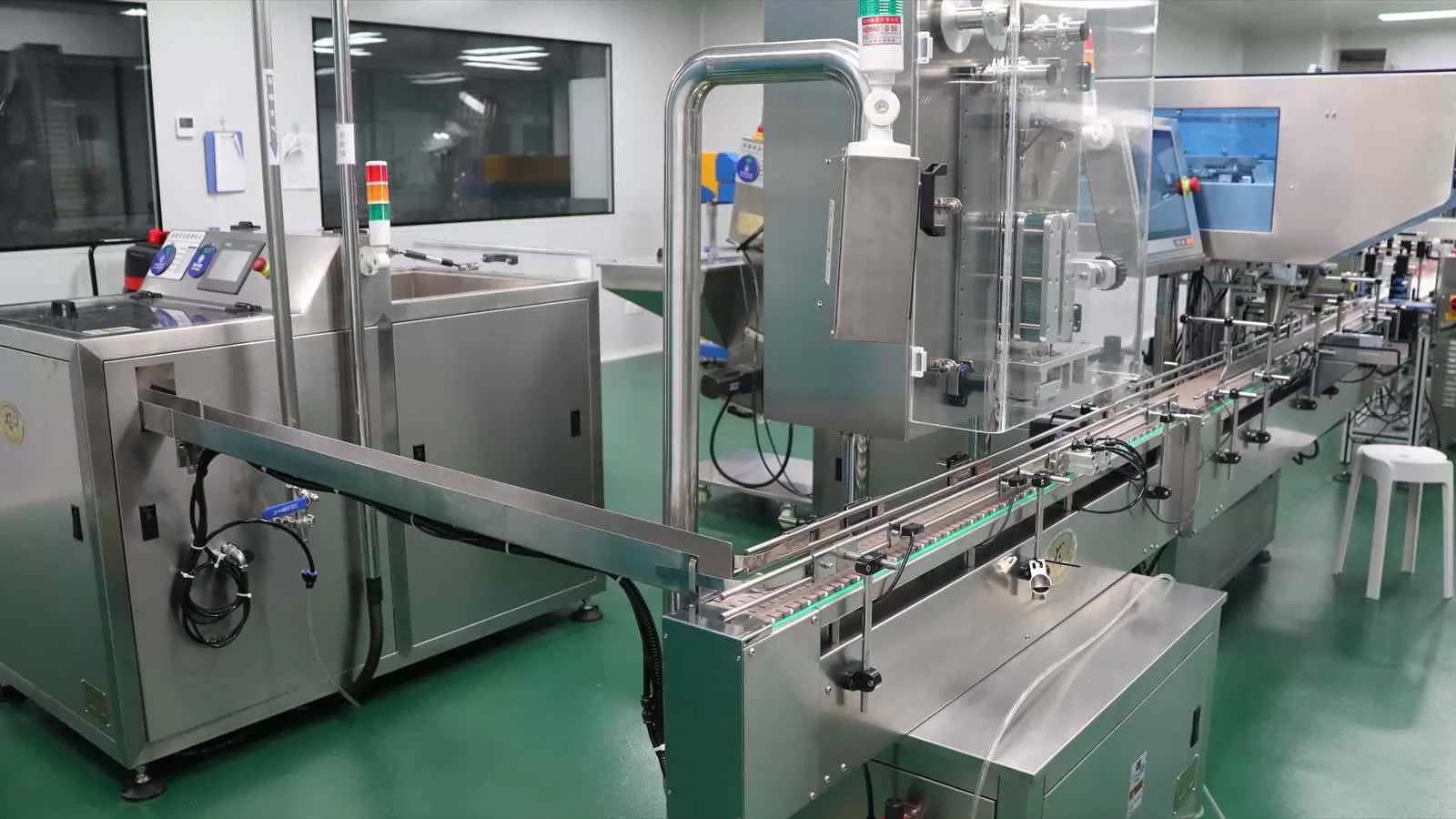
OEM manufacturing allows supplement companies to customize CoQ10 products according to their target price, dosage, formulation strategy, packaging requirements, and brand positioning.
Common customization options include:
- CoQ10 form: Ubiquinone or ubiquinol.
- Dosage: Standard or custom CoQ10 strength per softgel.
- Carrier system: MCT oil, olive oil, sunflower oil, or other compatible carrier systems.
- Combination formulas: CoQ10 combined with selected vitamins, oils, or other compatible nutrients.
- Capsule specification: Different shapes, sizes, shell colors, and transparency levels.
- Packaging: Bulk softgels, HDPE/PET bottles, glass bottles, blister packs, cartons, and customized labels.
- Private label service: OEM bottling, labeling, batch coding, induction sealing, and outer packaging.
Brands with an existing formula can submit it for feasibility evaluation, while buyers without a finished specification can work with an OEM manufacturer to develop a formula based on target dosage, positioning, and budget.
Bulk CoQ10 Softgel Wholesale vs. Private Label Supply
CoQ10 buyers generally choose between purchasing finished softgels in bulk or outsourcing the entire project through a private label manufacturing service.
| Procurement Model | Scope of Supply | Suitable Buyers | Main Advantage |
|---|---|---|---|
| Bulk CoQ10 Softgel Wholesale | Finished capsules supplied in bulk packaging | Supplement manufacturers, contract packagers, distributors, and brands with their own bottling capability | Flexible secondary packaging and efficient large-volume sourcing |
| Private Label CoQ10 | Formula, softgel manufacturing, bottle filling, labeling, sealing and retail packaging | Supplement brands, importers, e-commerce companies and distributors | Faster route from product concept to shelf-ready product |
| Custom OEM / ODM | Customized formulation plus commercial manufacturing and packaging | Brands developing differentiated proprietary products | Greater control over formulation and market positioning |
Bulk sourcing may be suitable for companies that already operate packaging facilities, while turnkey private label manufacturing is often more convenient for brands that want one supplier to coordinate production and final packaging.
What Information Should You Send to a CoQ10 Softgel Manufacturer?
Providing a detailed specification makes it easier for manufacturers to evaluate feasibility and prepare an accurate quotation.
A useful CoQ10 softgel inquiry should include:
- Product: CoQ10 softgel.
- CoQ10 form: Ubiquinone or ubiquinol.
- Dosage: Target CoQ10 milligrams per softgel.
- Formula: Single-ingredient CoQ10 or combination formulation.
- Carrier oil: Preferred oil system, if specified.
- Shell: Gelatin or alternative shell requirement.
- Capsule appearance: Shape, size, color, and transparency preference.
- Quantity: Initial order quantity and estimated annual demand.
- Supply format: Bulk capsules or finished retail packaging.
- Packaging: Capsules per bottle, bottle type, label, carton, or blister specifications.
- Target market: Destination market and applicable compliance requirements.
- Testing: Any specific assay, microbiological, heavy metal, stability, or third-party testing requirements.
The more precise the inquiry, the easier it is to compare quotations from different manufacturers on an equivalent specification.
How to Choose a CoQ10 Softgel Manufacturer in China
Unit price is only one factor when comparing CoQ10 suppliers. Buyers should also consider formulation knowledge, softgel manufacturing capabilities, quality systems, raw material sourcing, production consistency, documentation, and long-term supply reliability.
1. Softgel Manufacturing Experience
Look for a manufacturer with established oil-based softgel production rather than a supplier that focuses primarily on tablets or hard capsules.
2. CoQ10 Formulation Capability
The supplier should understand the formulation differences between standard ubiquinone, premium ubiquinol, low-dose formulas, and high-strength CoQ10 products.
3. Raw Material Traceability
Ask for ingredient specifications, COAs, supplier qualification procedures, and batch traceability documentation.
4. Quality Control
Evaluate how incoming materials, in-process production, and finished products are inspected. Confirm which analytical tests are conducted internally and which are outsourced to qualified laboratories.
5. Commercial Production Capacity
A manufacturer should be capable of supporting the initial project while also providing sufficient capacity for repeat orders and future volume increases.
6. OEM and Packaging Support
For private label projects, integrated bottling, labeling, sealing, carton packaging, and export preparation can simplify supply chain management.
7. Documentation and Export Support
Buyers should clarify what product specifications, COAs, manufacturing documentation, certificates, and export-related documents can be supplied for the target market.
Wright Life as a CoQ10 Softgel Manufacturer in China
Experienced Supplement Manufacturing: Wright Life provides OEM and ODM manufacturing services for nutritional supplement brands, distributors, importers, and professional buyers. Its production capabilities cover softgels, capsules, tablets, powders, and other supplement formats.
CoQ10 and Oil-Based Softgel Capability: Coenzyme Q10 softgels are part of Wright Life's oil-based supplement manufacturing portfolio. The company's softgel production capabilities allow brands to develop conventional CoQ10 formulations as well as customized products based on dosage, carrier system, capsule specification, and packaging requirements.
Commercial-Scale Softgel Production: Wright Life operates modern supplement manufacturing facilities and automated production lines designed to support both OEM product development and repeat commercial orders.
OEM and Private Label Support: CoQ10 projects can be configured around different buyer requirements, including:
- Custom CoQ10 dosage specifications
- Ubiquinone-based formulation development
- Oil carrier system selection
- Combination formulas with compatible nutrients
- Multiple softgel shapes and sizes
- Custom shell appearance
- Bulk CoQ10 softgel wholesale supply
- Private label bottling and packaging
- Custom labels and retail cartons
- Quality documentation and export support
For brands that want to combine CoQ10 formulation, softgel manufacturing, packaging, and bulk supply within one project, Wright Life can support projects from initial specification development through commercial manufacturing.
Buyer Questions, OEM Workflow & Sourcing Checklist
15 Questions to Ask a CoQ10 Softgel Manufacturer
- Do you manufacture CoQ10 softgels in-house?
- Can you manufacture both standard and custom CoQ10 dosages?
- Which CoQ10 raw material specifications do you commonly use?
- Can you provide complete COA and raw material traceability documents?
- Which carrier oils are available for CoQ10 softgel formulation?
- How do you maintain CoQ10 dispersion during commercial production?
- What capsule shapes and tooling sizes are currently available?
- Can shell color and appearance be customized?
- What is the MOQ for standard formulas?
- What is the MOQ for custom OEM formulations?
- Can you supply finished CoQ10 softgels in bulk?
- Do you provide private label bottling and labeling?
- Which finished-product tests are included with each batch?
- Can you provide development or pre-production samples?
- What documentation can you provide for export to our target market?
Typical CoQ10 OEM Project Workflow
- Product Requirement: Define CoQ10 form, dosage, formulation, capsule type, quantity, and target market.
- Formula Evaluation: Manufacturer evaluates ingredient compatibility, carrier system, capsule size, and production feasibility.
- Quotation: Raw material, manufacturing, packaging, testing, and quantity requirements are converted into a commercial quotation.
- Sample Development: Pre-production samples are prepared when required for appearance, capsule size, and formula evaluation.
- Specification Approval: Final formula, packaging, artwork, and quality requirements are confirmed.
- Bulk Manufacturing: Raw material preparation, blending, encapsulation, drying, sorting, and testing are completed.
- Packaging: Products are supplied in bulk or bottled, labeled, sealed, and packed according to the purchase specification.
- Inspection and Shipment: Finished-product documentation and final inspection are completed before shipment.
Bulk CoQ10 Softgel Sourcing Checklist
| Checkpoint | What to Confirm | Status |
|---|---|---|
| CoQ10 Form | Ubiquinone or ubiquinol clearly specified | Confirmed |
| Active Dosage | CoQ10 mg per softgel and serving size defined | Confirmed |
| Raw Material | Assay, purity, COA and traceability reviewed | Confirmed |
| Carrier System | Carrier oil and formulation system established | Confirmed |
| Softgel Specification | Shell material, size, shape and appearance approved | Confirmed |
| Finished Testing | Assay and applicable quality parameters defined | Confirmed |
| Packaging | Bulk or private label packaging specification finalized | Confirmed |
| Documentation | Required quality and export documents verified | Confirmed |
Frequently Asked Questions
What is a CoQ10 softgel?
A CoQ10 softgel is a sealed capsule containing Coenzyme Q10 formulated in an oil-based or compatible lipid delivery system. The format is widely used because CoQ10 is a fat-soluble ingredient.
What dosages can a CoQ10 softgel manufacturer produce?
Manufacturers can produce a variety of specifications depending on formulation feasibility. Common commercial strengths include 30 mg, 50 mg, 60 mg, 100 mg, and 200 mg, while custom dosages can also be evaluated.
Can CoQ10 softgels be customized?
Yes. Buyers can customize CoQ10 dosage, carrier oil, supporting ingredients, capsule size, shell appearance, bottle count, labels, cartons, and other packaging specifications.
What is the difference between ubiquinone and ubiquinol?
Ubiquinone is the oxidized form of CoQ10 and is widely used in conventional supplements. Ubiquinol is the reduced form and is commonly positioned as a premium CoQ10 ingredient. Their formulation and stability requirements differ.
Can I buy CoQ10 softgels in bulk?
Yes. Bulk CoQ10 softgel wholesale is suitable for distributors, supplement companies, and contract packaging businesses that perform secondary packaging themselves.
Can a manufacturer provide private label CoQ10 supplements?
Yes. A turnkey private label supplier can manage softgel production, bottling, labeling, induction sealing, retail packaging, and other OEM services.
What should I provide when requesting a CoQ10 OEM quotation?
Provide the CoQ10 form, dosage per softgel, formula requirements, carrier preference, capsule type, order quantity, packaging format, target market, and any special testing or documentation requirements.
Does Wright Life manufacture CoQ10 softgels?
Yes. Wright Life manufactures CoQ10 softgels and provides OEM/ODM services, bulk softgel supply, formula customization, and private label packaging for professional supplement buyers.
Conclusion
Developing a commercially reliable CoQ10 softgel requires coordinated control of raw material specifications, CoQ10 form and dosage, carrier oil selection, fill consistency, softgel encapsulation, stability, quality testing, and packaging.
For supplement brands and distributors, choosing a CoQ10 manufacturer should therefore involve more than comparing unit prices. Softgel production experience, ingredient traceability, formulation support, quality control, scalable manufacturing capacity, OEM packaging, and long-term supply reliability are all important factors.
For companies sourcing from China, Wright Life provides integrated support for custom CoQ10 softgel formulation, bulk production, wholesale supply, OEM/ODM manufacturing, and private label packaging.
Buyers planning a new CoQ10 product can contact Wright Life Health to discuss dosage specifications, formulation options, samples, bulk quantities, packaging, and OEM manufacturing requirements.
0
Comments
Leave a Comment
Your email address will not be published. Required fields are marked *
Name can't be empty
Email error!
Message can't be empty
😍
😜
😳
😌
😄
😘
😝
😒
😃
😚
😚
😛
😟
😧
😀
😉
😓
😱
😤
😣
😂
😥
😩
😠
😢
😭
😰
😨
😡
😆
😪
😅
😐
😇
😋
😴
👿
😕
😏
😷
😵
😟
😮
😯
😑
👧
👴
😧
😬
😾
👶
👱
👵
👸
🙀
👺
👦
👩
👨
😽
😿
🙈
💩
💥
💤
😼
😹
🙉
🔥
✨
💦
👎
✌
👆
👈
💪
💹
👍
👊
💴
💶
💷
💸
👉
💵
🙏
🌎
🏧
👏
💳
👇
💑
🙆
🙅
💁
👫
👭
🙎
🙇
👑
👔
Submit Comment
Most Popular
-
 Aug 19, 2026Top 10 Private Label Supplement Manufacturers in the USA (2026 Guide)
 -
 Jun 28, 2026Top China Supplement Manufacturers 2026: Ranking by Quality, Cost & Reliability
 -
 Jul 13, 2026Top 10 Private Label Softgel Manufacturers: The Ultimate Guide for Supplement Brands
 -
 Jul 22, 2026Top 10 softgel manufacturer in USA(2026 Guide)


Laster Blogs
-
 Sep 11, 2026CoQ10 Softgel Manufacturing Guide: Formulation, Bulk Production, Wholesale and Manufacturer Selection
 -
 Sep 11, 2026Top 10 Organic Capsule Manufacturers for Supplement Brands in 2026
 -
 Sep 09, 2026Oregano Oil Softgel Manufacturing Guide: Formulation, OEM Production, Bulk Supply and Manufacturer Selection
 -
 Sep 09, 2026Health Industry Technology Innovation Excellence Award Ceremony


Set A Consultation Today
Name can't be empty
Email error!
Send Your Message
*We respect your confidentiality and all
information are protected.